Cooking, Ice, Brushing Teeth and Formula During a Boil-Water Advisory
A boil-water advisory can leave ordinary routines unclear: Is tap water safe for pasta, ice, toothbrushing or a baby’s bottle? The right answer depends on the notice and how the water will be used. Use this practical breakdown to choose a safer option, avoid common mistakes and know when normal tap-water use can resume.
Start with the exact notice
A boil-water advisory usually means customers should boil tap water before using it for drinking or other activities that could lead to swallowing it. It may be issued as a precaution after a pressure loss, water main break, treatment problem or test result. An advisory does not necessarily mean contamination has been confirmed, but treat affected tap water as unsafe for uses covered by the notice until the responsible utility or health authority says otherwise.
Read the full notice, not just a headline or alert preview. Check the affected area, when the advisory began, which water uses it covers and what the instructions say about bottled water, boiling and children. If the message says “do not drink” or “do not use,” do not assume boiling makes the water safe. Those instructions can apply to a different kind of problem, including one that boiling cannot address. The distinction is explained in Boil-Water Advisory vs. Do Not Drink Notice: The Difference in Arizona.
If the notice does not clearly identify whether your address is affected, check the official utility website or contact the provider using its current contact details. Notices can cover part of a system rather than an entire city. Is Your Arizona Address Inside the Boil-Water Advisory Area? explains what to check before treating a notice as relevant to your home.
When boiling is the recommended treatment, bring water to a vigorous rolling boil and keep it boiling for the duration specified in the notice or official instructions. Public health guidance commonly calls for one minute of boiling, with a longer period at high elevations. Arizona includes communities at different elevations, so follow the directions for your location rather than assuming one timing instruction applies everywhere.
Let boiled water cool, then store it in a clean, covered container. Avoid putting fingers, cups or utensils into the supply. If you use bottled water, choose water from a safe source and keep containers closed until needed. Water from a hot tap is not a safer substitute; use cold tap water if you are preparing water to boil.
A household filter, refrigerator dispenser or reverse-osmosis unit is not automatically a substitute for boiling during an advisory. Many devices are designed for particular substances or taste concerns, not for every disease-causing microorganism or emergency. Check the specific notice before relying on any treatment device. Does Reverse Osmosis Protect You During an E. Coli Boil-Water Notice? covers why a home RO system should not be assumed to protect you during a boil-water event.
| Household use | Safer choice during a boil-water advisory | Common mistake |
|---|---|---|
| Drinking or making beverages | Bottled water or tap water boiled as instructed | Assuming a pitcher or refrigerator filter is enough |
| Cooking food that absorbs water | Bottled or properly boiled water | Using unboiled tap water for pasta, rice or soup |
| Ice and chilled drinks | Commercial ice from a safe source, or ice made with safe water | Keeping ice made from affected tap water |
| Brushing teeth | Bottled or boiled water | Swallowing or rinsing with unboiled tap water |
| Infant formula | Ready-to-feed formula when appropriate, or water prepared according to official instructions | Mixing powdered formula with unboiled tap water |
| Washing produce eaten raw | Bottled or boiled water | Rinsing food under the tap and assuming cooking later will help |
| Washing dishes | Follow the notice’s dishwashing instructions | Assuming every dishwasher cycle makes water safe |
The table is a quick reference, not a replacement for the notice. A local instruction may be more specific, and a “do not drink” or “do not use” notice requires different steps.
Cooking, washing food and preparing drinks
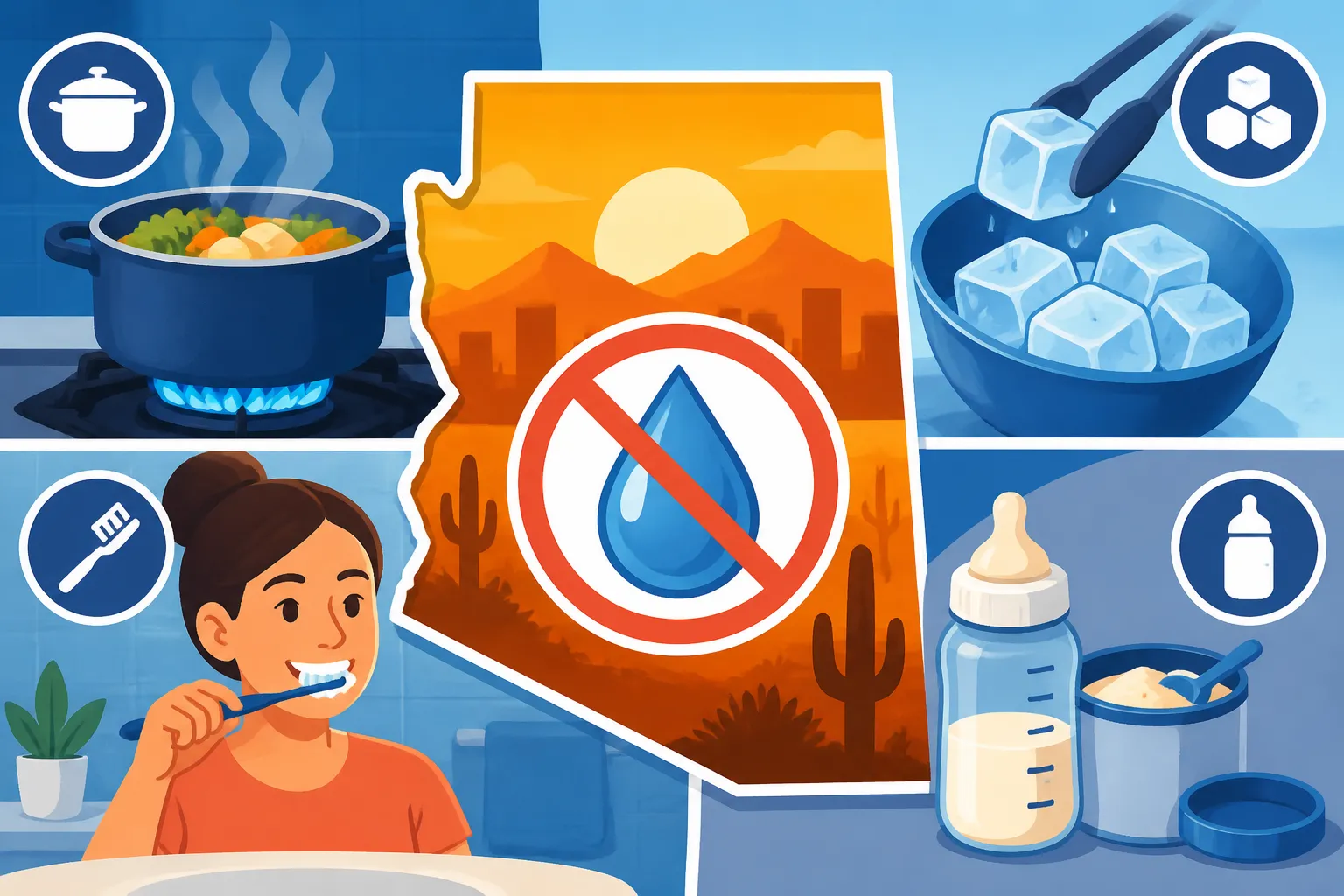
If tap water could enter food or a drink, use bottled water or water boiled according to the notice. This applies even when the water will be heated as part of cooking. A pot of soup may reach a boil, but other ingredients or the cooking process may not receive the required treatment for the required time. Starting with safe water is the simpler approach.
Use safe water for foods that absorb water, including rice, beans, oatmeal, pasta and powdered mixes. Also use it for soup, broth, sauces and drinks such as coffee, tea, lemonade and powdered beverages. Do not add unboiled tap water to a drink after heating it, and do not use unboiled water to dilute juice or cool a hot beverage.
For washing fruits and vegetables that will be eaten raw, use bottled or boiled-and-cooled water. The same applies to rinsing herbs, salad greens and food-preparation utensils that will touch ready-to-eat food. If produce will be thoroughly cooked, ask whether the notice permits ordinary tap water for that use; when the instructions are unclear, use safe water for washing as well.
A quick wipe of a counter with a wet cloth can spread unsafe water if the cloth was rinsed under the tap. Use bottled or boiled water for surfaces and utensils that will contact food, or follow the notice’s instructions for cleaning and sanitizing. Keep raw-food handling separate from ready-to-eat food, as usual, and wash hands with soap and safe water when they may touch food or go into the mouth.
Boiling water in a kettle, coffee maker or countertop appliance does not always provide the same treatment as bringing water to a rolling boil for the recommended time. Some appliances shut off as soon as water reaches a temperature below a sustained boil. Do not assume an automatic cycle is sufficient unless the notice or appliance instructions confirm it. Instead, boil water in a pot for the stated time, then use it in the appliance if needed.
The same caution applies to hot-water dispensers, espresso machines and other plumbed appliances. Water passing through an appliance is still tap water unless the device is specifically suitable for the issue described in the notice. A filter may improve taste or reduce a named contaminant while doing nothing to address the reason for the advisory.
For dishes, follow the local notice. Recommendations can depend on the type of dishwasher and whether it has a sanitizing cycle. If hand-washing is necessary, use safe water for the final rinse when the notice calls for it, or use the sanitizing method specified by the local authority. Avoid leaving dishes to air-dry with unsafe water droplets on them. For current guidance on refrigerator dispensers and ice-making equipment, see Refrigerator Filters and Ice Makers: Upkeep Arizona Cities Recommend.
If you are preparing food for someone who may be more vulnerable to waterborne illness, be especially careful about cross-contamination. Keep boiled or bottled water in a clearly identified, covered container, and use a clean ladle or pouring spout rather than dipping cups into it. Do not refill a safe-water container with untreated tap water while the advisory remains active.
Ice, ice makers and cold drinks
Do not use ice made from affected tap water during the advisory. Freezing does not reliably make unsafe water safe. Empty ice trays, discard stored ice made during the advisory and do not add it to drinks, coolers or food. If you are unsure when ice was made, discard it rather than guessing.
An automatic ice maker may continue producing ice even when the water supply is under an advisory. Turn it off or stop using its ice until the advisory is lifted and the appliance has been handled according to the utility’s instructions. Do not rely on a refrigerator filter unless the notice specifically says it is an appropriate alternative. Filters have different capabilities, and a filter’s claim for taste, lead or another substance does not establish that it handles microorganisms involved in a boil-water advisory.
When the notice is lifted, follow any instructions for the ice maker, refrigerator water dispenser and connected lines. Depending on the situation, the utility may advise flushing plumbing or discarding ice made during the event. Do not assume that newly produced ice is safe immediately after an advisory ends without checking the release instructions. Is the Boil-Water Advisory Over? How Arizona Residents Can Verify explains how to confirm that the notice has actually been lifted.
For drinks, use bottled water or tap water that has been boiled and cooled as directed. This includes water for a child’s cup, a pet’s bowl, ice cubes and water used to rinse a reusable straw or bottle. If a drink container has been filled with untreated tap water, empty it and wash it using the local dishwashing instructions before refilling it with safe water.
A commercially sealed beverage can be a convenient alternative, but water-based drinks prepared at home still require safe water. If you use a water cooler or dispenser connected to the plumbing, treat it as part of the household water system unless the provider says otherwise.
Brushing teeth and other mouth-related uses
Use bottled water or properly boiled-and-cooled water to brush teeth during a boil-water advisory. This is important for adults and children because brushing involves repeated contact with the mouth, and young children may swallow some water. Use safe water for rinsing toothbrushes, cleaning a mouthguard or retainer, and mixing a mouth rinse.
To make the routine easier, keep a small, covered container of safe water by the sink. Pour water into a clean cup rather than drinking directly from the container. Do not refill it with untreated tap water until the advisory is lifted. If a toothbrush has been rinsed with affected tap water, follow the local notice or ask the utility or health department whether it needs to be replaced; do not assume that rinsing it again under the tap will make it safe.
The same principle applies to anything that goes into the mouth. Use safe water for rinsing dentures, cleaning a baby’s pacifier or preparing a child’s oral-care items. If you have a medical or dental device that requires special care, check with a qualified professional or the device manufacturer rather than improvising.
Handwashing is still important. Follow the notice’s advice about washing hands and avoiding swallowing tap water. When safe water is limited, use soap and safe water for food handling and mouth-related tasks first, and keep a separate supply for other household needs. If you are uncertain about a specific use, check the exact advisory or contact the utility or local health department.
Infant formula and water for babies
Formula preparation deserves extra care because infants are more vulnerable to waterborne illness and powdered formula is not sterile. During a boil-water advisory, use ready-to-feed liquid formula when it is suitable for the baby and available. It does not require adding water, which avoids one source of risk. Follow the label’s storage and handling directions after opening.
If you use powdered or concentrated formula, do not mix it with unboiled tap water. Use bottled water from a safe source or water boiled and cooled according to the advisory and public health instructions. Measure the water and formula exactly as directed on the product label. Do not add extra water, and do not boil prepared formula. Heating formula itself can cause burns and does not replace safe preparation.
Some babies need more specific precautions, including newborns, babies born prematurely and babies with a weakened immune system or other medical concerns. Powdered formula may carry risks unrelated to the household water supply, so a caregiver should ask the baby’s clinician or local health department which preparation method is appropriate. Ready-to-feed formula may be recommended in some situations, but the right choice depends on the child and the advisory.
Do not use water from a hot tap to prepare formula. Hot tap water can contain more metals from plumbing than cold water, and it has not been boiled as instructed. If the household must use boiled water, plan ahead so it can cool safely in a clean, covered container. Keep prepared water separate from untreated tap water and use it within the time and storage limits advised by the formula label or health professional.
Sterilize bottles and feeding equipment as directed by the product manufacturer and the child’s clinician. If the advisory includes instructions about washing or sanitizing bottles, follow those instructions as well. Using safe water to mix formula does not automatically make an unclean bottle safe.
Do not assume that bottled water is sterile. It may be suitable for avoiding the affected tap supply, but the formula itself and preparation practices still matter. For a baby who needs a medically specialized formula, or if safe water is not available, contact the child’s clinician, local health department or the official utility for current guidance rather than changing formula or diluting it.
For broader Arizona-specific advice about water and formula, see Hot Tap Water for Cooking or Baby Formula: Arizona Utility Advice. If an infant may have consumed water affected by a notice and you are worried about health effects, contact a medical professional or local health department for advice.
After the advisory ends
A message saying the advisory is lifted is the point to check for final steps, not a reason to assume every household appliance is ready for immediate use. The utility may recommend flushing household plumbing, running a particular tap, replacing a filter cartridge or discarding ice. Follow the instructions for your system and address.
Do not rely on a forwarded text, an old social media post or a neighbor’s message as proof that the advisory has ended. Look for an update from the official utility or public health authority. If the alert system is unclear, use the provider’s official website to find current notices and contact information. How Arizona Utilities Tell Customers About Drinking Water Problems describes common ways providers communicate, while Is the Boil-Water Advisory Over? How Arizona Residents Can Verify focuses on checking the release.
Once normal use is allowed, return to ordinary tap-water use only after completing any household steps required by the notice. If the water still looks, smells or tastes unusual, or an appliance continues to produce questionable water or ice, contact the utility rather than assuming the advisory has returned or that the water is safe based on appearance. A change in appearance or taste does not by itself identify the cause.
Keep a copy or screenshot of the notice until the issue is resolved. That makes it easier to check the affected area, start time and final instructions, especially if different updates reach household members at different times. For a practical overview of what an advisory can involve, read Boil-Water Advisories in Arizona: A Practical Guide for Households.
Frequently Asked Questions
Can I use tap water for pasta if it will boil?
Use bottled water or water boiled according to the advisory when preparing pasta. The cooking process is not a reliable substitute for following the specified water-treatment instructions, especially if the water is absorbed or the finished food is rinsed.
Can I make ice during a boil-water advisory?
Only make ice with bottled water or tap water that has been boiled and cooled as instructed. Do not use ice made from untreated tap water, and check the notice for directions about cleaning an automatic ice maker after the advisory ends.
Is a refrigerator filter enough during the advisory?
Not unless the notice specifically says that the exact filter is suitable for the issue. Filter claims vary, and a device designed for taste or a particular chemical contaminant may not address microorganisms. Follow the advisory’s directions.
Can I use unboiled tap water to brush my teeth?
No. Use bottled or properly boiled-and-cooled water for brushing, rinsing and cleaning items that go in the mouth until the responsible authority lifts the advisory and provides any final instructions.
What should I do if I do not have bottled water for formula?
Follow the advisory’s instructions for boiling water and ask the baby’s clinician or local health department for guidance, especially for a newborn, premature infant or baby with medical concerns. Do not mix formula with untreated tap water or dilute formula beyond its directions.
Disclaimer
This article is for general informational purposes only and does not constitute professional advice. Laws, prices and regulations vary by location and change over time. Consult a qualified professional for guidance on your specific situation. Arizona Water Hub is not a government agency or water utility and is not affiliated with any public water system.