How Arizona Utilities Tell Customers About Drinking Water Problems
A water problem can reach customers as a direct notice, an outage update, a service-line letter, or information in an annual report. The hard part is knowing which message applies to your home and what to do next. This article explains the main ways Arizona utilities communicate, how to interpret different notices, and where to verify current instructions for your address.
The main ways a utility may communicate
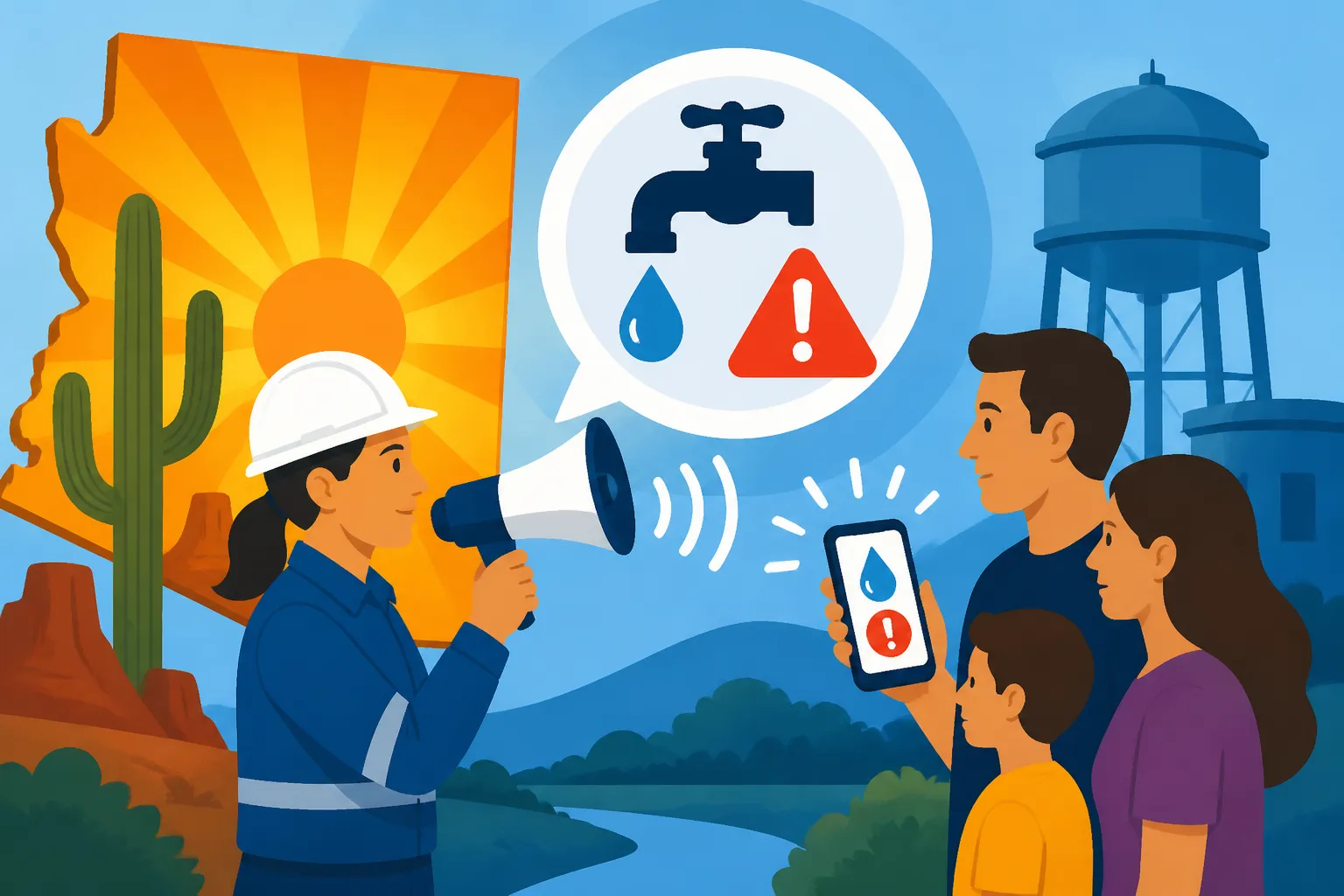
Utilities can communicate drinking-water information in different formats because not every situation is the same. A change affecting a particular address may call for a direct notice, while broader information may appear in a utility’s annual water quality report. An urgent service disruption may also be communicated separately from routine water-quality reporting.
The delivery method can vary, too. A notice may arrive by mail, be posted on the utility’s website, appear in an account or alert system, or be shared through another channel the provider uses. Do not assume that every utility uses the same methods, or that one channel will cover every customer. Check the provider’s official website for current alert options and contact details.
Here are common types of information customers may encounter:
| Communication | What it may tell you | What to check |
|---|---|---|
| Water quality report | Information about the system’s water quality and reported results | Whether it covers your water supplier and service area |
| Direct customer notice | Information aimed at customers affected by a particular issue | The addresses or area covered and any instructions |
| Outage or service update | Information about a disruption and the utility’s response | Whether your address is included and whether follow-up guidance is posted |
| Service-line communication | Information about the material of a service line or uncertainty about it | Whether the notice refers to the utility side, customer side, or both |
| Water-use advisory or notice | Instructions about using water during a reported problem | The exact activities affected and how the utility says to proceed |
These categories can overlap, but they are not interchangeable. An annual report is useful background; it is not a substitute for a current notice about an active outage. Similarly, an outage update may describe the service interruption without answering every question about water quality.
If the issue involves a taste, odor, or color change, start by separating a household plumbing problem from a broader supply issue. A change at one fixture may have a different explanation from a change across the neighborhood. The steps in Taste, Odor and Color Problems in Arizona Tap Water: An Overview can help you organize what you are noticing before contacting the provider.
For an unplanned interruption, check whether the provider has posted an update for your area. Water Outage on Your Street? Checking Whether Your Address Is Affected and When Will the Water Come Back On? Reading a Utility Outage Map explain how to think about address-level outage information. A map or general update may not answer every question, so use the provider’s current instructions if they are available.
What different notices mean
A notice is most useful when you identify what kind of issue it describes before deciding what action to take. A customer letter about a possible lead service line, for example, is not the same thing as a notice about a current water-quality event. Nor does a delay in receiving an annual report by itself tell you whether there is an active problem at your tap.
Water quality results and violations
A water quality report summarizes information about the water system. It can help customers understand what the provider reports about the supply, but it may not describe the condition of every home’s plumbing or the water at one specific faucet. For help finding the right report and understanding its limits, see Consumer Confidence Reports in Arizona: Finding and Reading Yours and What an Arizona Water Quality Report Can and Can’t Say About Your Home.
The timing and urgency of a violation notice depend on the type of issue. According to the City of Scottsdale, for a Tier 3 violation of a drinking water standard that does not directly affect human health, the water supplier has up to a year to notify customers. That timing applies to the category described; it should not be assumed to apply to every notice or drinking-water problem.
A delayed notice in that category does not mean that customers should ignore a separate current communication. Read the notice for the issue it covers, the date or period involved, and any directions. If the wording is unclear, contact the water supplier through its official website and ask what the notice means for your service area.
For help distinguishing a reported result from a health-based limit, Health Limit, Advisory or Taste Guideline? Sorting Out Water Results and No Violations Doesn’t Mean Nothing Detected: Reading Arizona Reports provide useful context. A report’s terms can be technical, so avoid drawing a conclusion from a single number without checking the explanation and units included in the document.
Outages and possible lead concerns
A water-service disruption can raise questions beyond when service will return. According to the City of Mesa, when a water-service disruption results from construction, a water main break, or another outage, Mesa must issue a notice to those affected regarding potential for elevated levels of lead. The notice is relevant to affected customers, so check whether the utility identifies your address or area as covered.
A communication about potential lead is not the same as a laboratory result from your kitchen tap. Lead can be associated with plumbing materials, and the water supplier’s system-wide information does not establish the condition of every home fixture. Follow the notice’s directions and use the utility’s official information to find out what applies to your location. For more context, see The Lead Notice Arizona Customers May Get After a Water Main Break and Does a City Water Report Describe Lead at Your Own Faucet in Arizona?.
If a notice gives specific instructions for water use, follow those instructions rather than relying on general advice from another situation. If no direction is clear, ask the provider what customers in the affected area should do while service is disrupted and whether it will issue an update.
Service-line notices
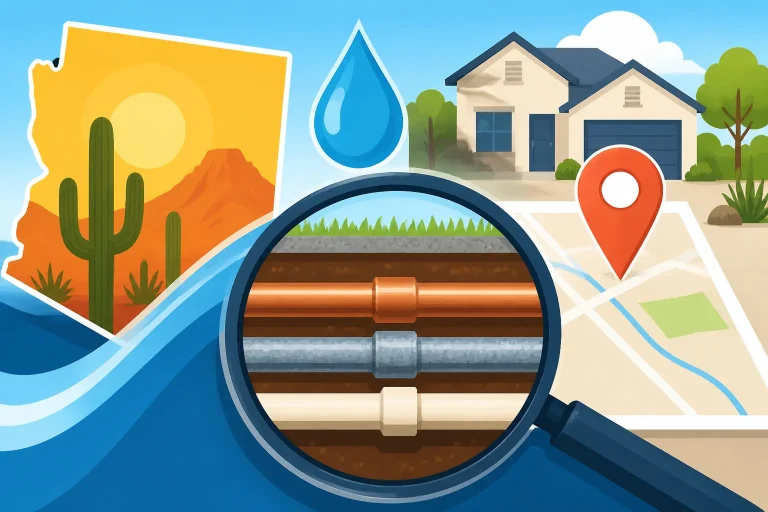
Service-line material information is another reason a utility may contact customers. According to the City of Chandler, community water systems must notify customers when they lack information confirming a service line is not lead, and are required to notify their customers of the potential for their service line to contain lead. That kind of notice communicates uncertainty about the material; it is not the same as confirmation that the line is lead.
According to the City of Glendale, Arizona, customers are notified if their service line material is Lead, galvanized, or unknown. Read the specific description in your notice and check which section of the service line it concerns. If the material is unknown, the message does not establish that it is lead; it identifies a lack of confirmed material information.
A service-line inventory is not necessarily a test of the water at an individual faucet. Likewise, an inventory entry does not by itself tell you whether interior plumbing or a fixture could affect water quality. How to Look Up the Service Line Material at Your Arizona Address and Service Line vs. Indoor Plumbing: What an Arizona Inventory Covers explain the distinction and what information to look for.
How to check whether a notice applies to your home
Start with the provider named on your water bill or service account. The utility that supplies your home may not be the city you live in, so do not rely only on a city name or a neighbor’s notice. If you are unsure who supplies your water, Which Utility’s Water Quality Report Covers Your Arizona Address? can help you identify the right report.
Then check the notice itself. Look for the service area, street names, affected addresses, issue description, and any instructions. If a notice is addressed to a named customer, confirm that the service address is yours. If it is a general update, verify whether the location described includes your home.
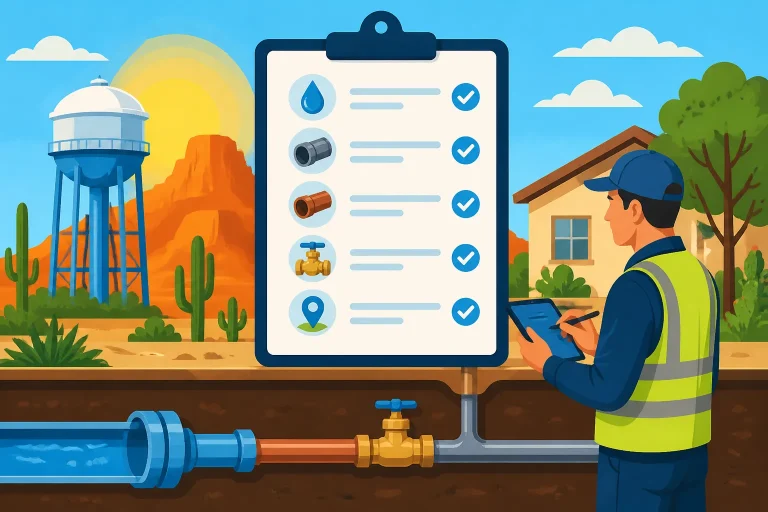
Use the following process:
- Identify the water supplier. Check a recent water bill, account information, or the provider’s official website.
- Find the original notice. Check the delivery channel the utility used, including any alert account or email you have registered, and look on the official utility website for a current update.
- Match the notice to your address. Do not assume a notice for another street, neighborhood, or service area applies to you.
- Read the issue and instructions closely. Determine whether it concerns an outage, a water-quality result, a service line, or another matter.
- Check for a newer update. A later utility communication may clarify or replace earlier instructions.
- Ask the supplier if key details are missing. Use current contact information from the official utility website and ask whether your address is affected and what action is recommended.
Keep a copy or screenshot of a notice and note when you received it. This can make it easier to compare an earlier message with a later update, especially if the provider changes its instructions or adds details. Do not treat a neighbor’s message or a social media post as confirmation that the utility has issued the same guidance for your address.
When asking a provider for clarification, focus on practical questions: Is my service address in the affected area? What part of the system does the notice refer to? What should I do now? Will the utility send another update, and where should I check for it? A specific question is more likely to resolve uncertainty than asking only whether the water is safe.
If your home is a rental or part of a shared building, check how the property manager communicates utility messages, as well as the provider’s official updates. The utility’s notice may be directed to an account holder rather than every resident. Do not assume a building-wide message has reached everyone who needs the information.
Reports, alerts, and staying informed
A water quality report and an urgent notice serve different purposes. The report is a recurring source of system information; a direct notice or outage update may address a particular event or a specific group of customers. Checking both can provide a fuller picture, but neither should be used to guess what a current notice means.
According to the City of Tempe, Tempe notifies customers that the report is available before July 1 each year. That is a report-availability notice, not necessarily a warning about a current water problem. To find the right document, confirm that the report covers your supplier and service area. What Arizona Consumer Confidence Reports Must Include, and When explains what to look for in these reports, while Requesting a Printed Water Quality Report From an Arizona City covers how to seek a copy if you need one.
Consider setting up the alert options your utility makes available. A provider may offer email or text notifications, but availability and enrollment steps differ. Check the official utility website for the current options, make sure your account contact details are up to date, and review whether alerts are available for outages, water-quality issues, or both. Getting Water Service Alerts by Text or Email From an Arizona Utility and Missed an Outage Alert? Updating Contact Details With Your Provider offer related guidance.
It can also help to keep a small record of water-related messages. Save the notice, the date you received it, and any follow-up from the provider. If you call or submit a question, note the response and where the utility says to look for updates. This is not a substitute for the provider’s instructions; it simply makes it easier to follow changes without relying on memory.
Use official information as the starting point when a message circulates online. A screenshot might be out of date, refer to a different area, or omit the instructions that appeared with the original notice. Verify the message on the provider’s official website or through current utility contact details. If the utility has posted a specific advisory, follow that advisory rather than broad guidance written for a different event.
For a new or unusual taste, odor, or appearance, do not assume it is a drinking-water emergency, but do not dismiss it solely because a general report looks normal. Note whether the change is limited to one tap or is present elsewhere, check for a provider update, and contact the supplier if you cannot determine whether the issue is local or system-wide. Odd Taste at Just One Faucet? Plumbing, Fixture or the Water Supply can help you consider what to check before deciding what the change means.
What to do when a message is missing or unclear
A missing notice can be frustrating, but it does not tell you whether your address was affected. Notices may be sent through different channels, and a customer may not be enrolled in every alert option. Check the provider’s official website for current updates and confirm that the account’s mailing and electronic contact details are correct.
If the notice refers to a problem but does not explain what to do, contact the water supplier and ask for the instructions that apply to your address. Be ready to describe the notice, the service location, and what is unclear. If there is a current advisory, ask whether the provider has issued a newer version and where it publishes updates.
For lead-related questions, separate three issues that can otherwise get blurred together:
- The service-line material: whether it is known, unknown, lead, or another material.
- The water-system notice: what the utility is communicating and which customers it covers.
- The water at a particular tap: what a test of that location may show.
An answer about one does not automatically answer the others. The service-line notice may identify uncertainty about a pipe, while a water test concerns a specific sample. A system report describes the supplier’s reporting, not necessarily each home’s plumbing. Finding a Certified Lab to Test Arizona Tap Water for Lead explains how to approach a test when a household-specific result is needed.
For boil-water or other use advisories, the notice’s directions matter. Do not assume a prior advisory, a neighboring community’s instructions, or an online summary applies to your address. Boil-Water Advisories in Arizona: A Practical Guide for Households explains how to respond to a boil-water advisory, and Boil-Water Advisory vs. Do Not Drink Notice: The Difference in Arizona helps distinguish different types of instructions.
If the question concerns a possible health effect, contact a medical professional or local health department rather than relying on a general interpretation of a utility notice. For questions about what the utility has detected or what action it recommends, contact the supplier using current details from its official website.
Frequently Asked Questions
Does every water problem lead to a notice sent directly to each customer?
Not necessarily. Communication methods and the customers covered can differ by issue and provider. Check the utility’s official website and any direct notice you received to confirm whether your address is included.
Does an unknown service line mean the line is lead?
No. An unknown label means the material has not been confirmed in the information described by the notice. Check the wording and ask the water supplier what it knows about the line at your address.
Is an annual water quality report the same as an urgent notice?
No. An annual report is a recurring source of water-system information. An urgent notice or outage update addresses a particular situation or affected area. Review the document that matches your question and look for current utility updates.
What should I do if an outage notice mentions possible lead?
Check whether the utility identifies your service address or area as affected, then follow the notice’s instructions. If anything is unclear, contact the water supplier through its official website and ask what applies to your home.
Where can I confirm whether a notice is current?
Check the water supplier’s official website or use its current contact details to ask directly. If you have an older message, look for a later update before relying on it.
Sources
- City of Scottsdale — 2026 Water Quality Report (PDF) (checked November 13, 2026)
- City of Mesa — Lead and Copper – City of Mesa (checked November 13, 2026)
- City of Chandler — Chandler Lead and Copper Rule Inspection | City of Chandler, AZ (checked November 13, 2026)
- City of Glendale, Arizona — Lead and Copper | City of Glendale, AZ (checked November 13, 2026)
- City of Tempe (checked January 15, 2026)
Disclaimer
This article is for general informational purposes only and does not constitute professional advice. Laws, prices and regulations vary by location and change over time. Consult a qualified professional for guidance on your specific situation. Arizona Water Hub is not a government agency or water utility and is not affiliated with any public water system.